

DANA, incendios, colas y silencios: el país real frente al plató político‑parlamentario y tertuliano
Hay un lenguaje que no se aprende en el Hemiciclo: el de la humedad. El musgo lo habla sin voz. El liquen lo firma sin tinta. Se instalan donde el tiempo pesa y el ruido no manda.
En Baliñas —en la cuenca del Donsal— el agua no es “tema”: es estructura. Cuando un regato se atasca, cuando un cauce se abandona, cuando una ladera se deja al azar, la naturaleza no negocia: responde. Y esa respuesta hoy se llama clima extremo: avenidas, inundaciones, pérdidas, barro.
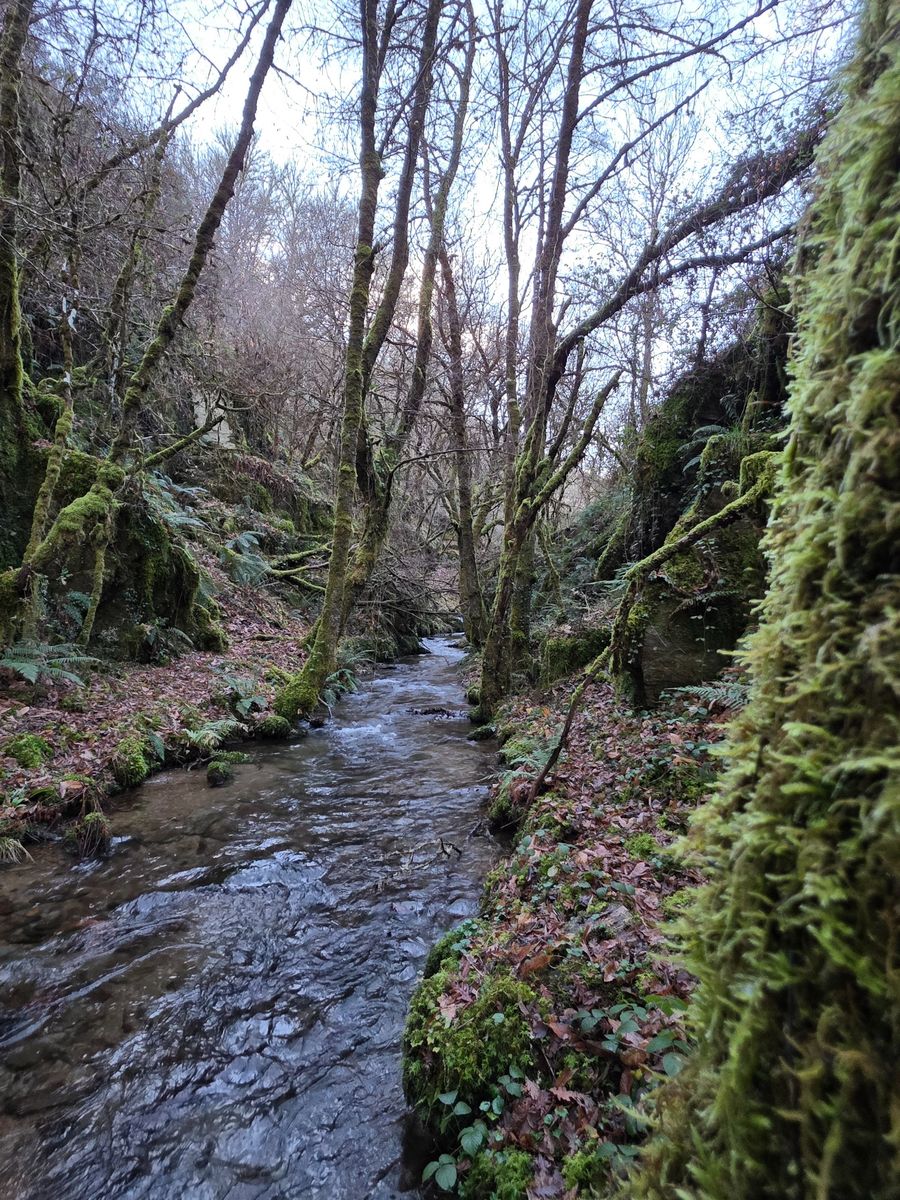
Río Donsal encajado en fraga húmeda: la prevención natural existe, aunque no dé titulares
En paralelo, la política se ha acostumbrado a otra lógica: Congreso, Senado, tertulias. Mucha frase rápida; poca arquitectura preventiva. Mucha descalificación; poca evaluación. Mucha cuña; poca ejecución. Y el país real —trabajadores, mayores, estudiantes en prácticas, negocios y aldeas— hace lo que mejor sabe: aguantar.
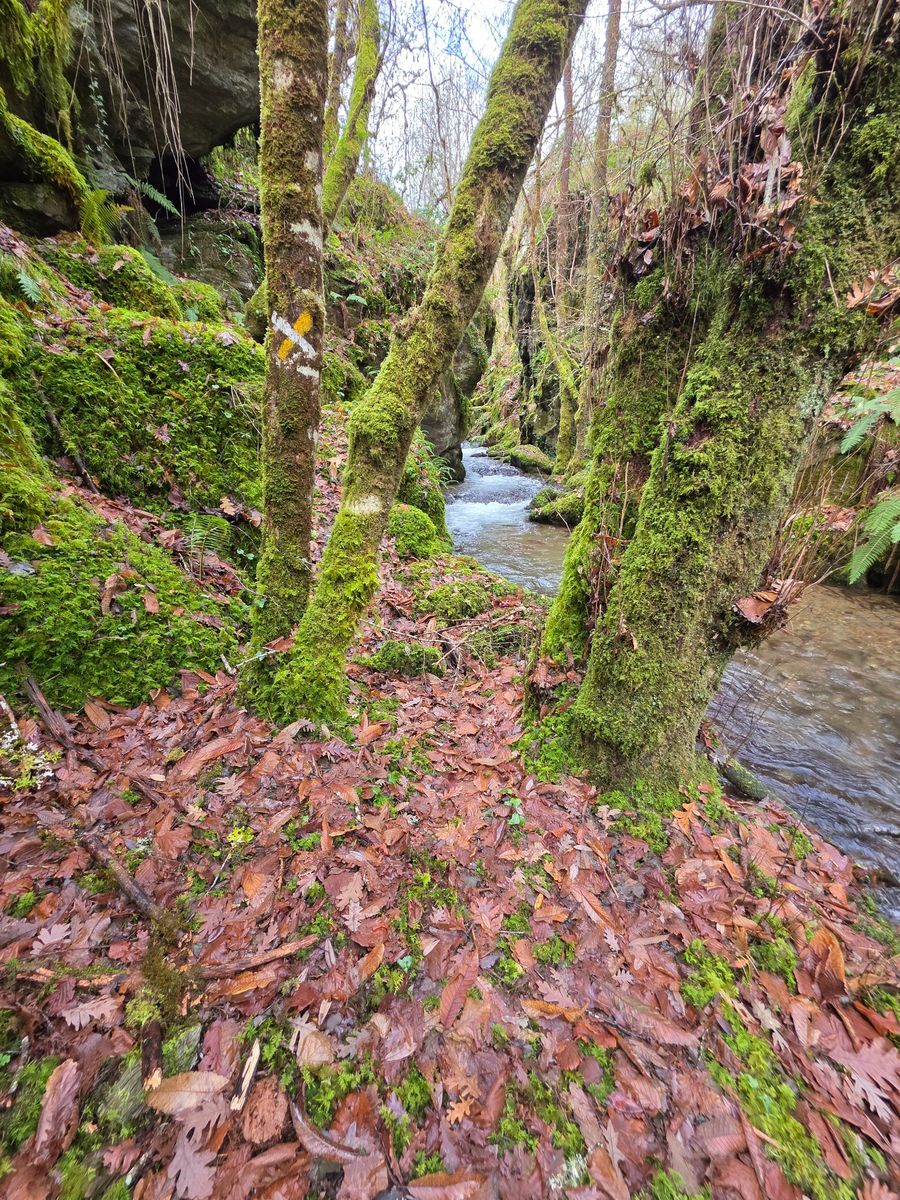
Senda señalizada y roca viva: sostener y mantener antes del golpe —eso es gobernar de verdad
Los incendios también son examen: lo que no se limpia, arde; lo que no se gestiona, se convierte en combustible; lo que no se coordina, se convierte en tragedia. Después llega el ritual: el operativo como espectáculo y la prevención como pie de página.
La burocracia y la demora judicial completan el retrato: derechos que se consumen en plazos, silencios y recursos; empresas que se desangran en autorizaciones; comarcas rurales que pierden futuro esperando una resolución. Y, en el mundo del consumo, reclamaciones que deberían ser rápidas acaban convertidas en desgaste.
Por eso miramos el musgo: no como postal, sino como acusación. Nos recuerda que gobernar es mantener, prevenir, coordinar, reparar. Y que cuando el Parlamento y la tertulia se separan del país real, el clima —y la vida— los devuelve a la realidad con barro y ceniza.
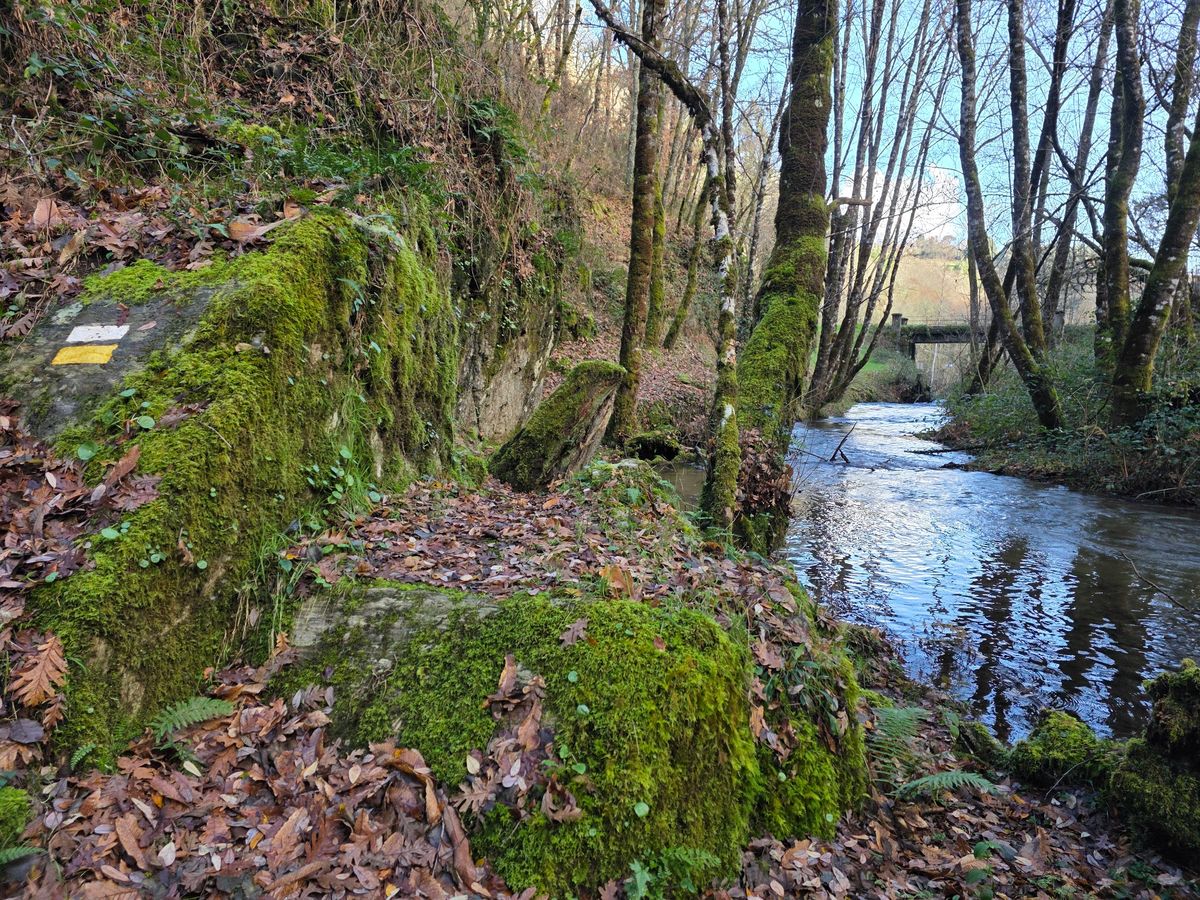
Escorrentías visibles en el valle: el clima extremo convierte la falta de mantenimiento en daño
There is a language you do not learn inside a chamber: the language of humidity. Moss speaks it without a voice. Lichen signs it without ink. They settle where time is heavy and noise does not rule.
In the Donsal basin, water is not a “topic”; it is structure. When a stream is blocked and a riverbed is abandoned, nature does not negotiate: it responds. Today that response is called extreme weather—surges, floods, loss, mud.
A stream in a wet gorge: natural prevention exists, even if it doesn’t make headlines
In parallel, politics has grown used to a different logic: Congress, the Senate, talk shows. Many fast phrases; little preventive architecture. Many insults; little evaluation. Many soundbites; little implementation. And real life—workers, elders, students in internships, businesses and villages—does what it knows too well: endure.
Marked trail and living rock: sustaining and maintaining before impact — that is real governing
Wildfires are another exam: what is not maintained burns; what is not managed becomes fuel; what is not coordinated becomes tragedy. Then comes the familiar ritual: operations as spectacle, prevention as a footnote.
Bureaucracy and judicial delay complete the portrait: rights consumed by deadlines and silence; enterprises bleeding through permits; rural regions losing their future while waiting for a decision. Consumer complaints, too, become long desgaste when the system does not answer promptly.
That is why we look at moss—not as a postcard, but as an accusation. It reminds us that governing means maintaining, preventing, coordinating and repairing. And when Parliament and talk shows drift away from real life, climate—and life—bring them back with mud and ash.
Visible runoff in the valley: extreme weather turns lack of maintenance into damage
 Spanish
 Arabic
 Chinese (Simplified)
 Dutch
Dutch English
 French
 German
 Italian
 Portuguese
 Russian



 Entradas (RSS)